Two trunks fighting for the lead
Codominant stems with bark pinched in the union are the classic live oak failure point. Structural pruning picks a winner while the cut is still small.
God's Country Tree Service LLC is a licensed and insured tree service based in DeLand, Florida, serving Volusia County since 2014. Our pruning is certified-arborist guided — structural cuts, deadwood removal, and crown thinning that keep live oaks healthy and storm-ready — with free written estimates within 24 hours.
Unpruned live oaks and laurel oaks grow codominant stems, over-long limbs, and dense canopies that catch hurricane wind like a sail. In DeLand's sandy Central Florida soil, that extra load works roots and branch unions until something gives. Pruning removes the weak points years before they fail.
Codominant stems with bark pinched in the union are the classic live oak failure point. Structural pruning picks a winner while the cut is still small.
Horizontal limbs stretched over the roof or pool screen enclosure gain leverage every season. The longer they get, the more the eventual fix costs.
Dead, bark-shedding limbs parked in the canopy interior are what hurricane wind removes first — usually onto whatever sits underneath them.
A dense, never-thinned crown catches storm gusts like a sail, working the roots loose in DeLand's sandy soil instead of letting the wind slide through.
Certified arborist pruning means every cut is chosen for the tree's biology — where the branch collar sits, how the species closes wounds, and what the canopy needs to stand up to storm season. It matters because a bad cut never heals; DeLand oaks carry them for decades.
Anyone with a saw can shorten a branch. Knowing which branch, where the cut closes fastest, and how a live oak rooted in sandy Central Florida soil will respond two growing seasons from now is the actual trade. God's Country Tree Service LLC has pruned DeLand's oaks, pines, and palms since 2014 — from the moss-draped canopies around historic downtown DeLand to newer yards in Deltona and Orange City — and certified arborist judgment decides every cut before a rope goes up.
Cuts that close. Every pruning cut lands just outside the branch collar — the tissue that seals the wound — so the tree compartmentalizes instead of rotting from the stub inward.
One crew, canopy to curb. Climbing, rigging, chipping, and cleanup from the same tree-and-land-clearing company — no second contractor to schedule, no brush pile left at the street.
Honest scope. If your tree needs a light trim instead of corrective pruning — or removal instead of either — you'll hear it plainly at the free estimate, not after the invoice.
Four, in a deliberate order: structural cuts that build one strong leader, deadwood removal that clears brittle gray limbs, crown thinning that lets hurricane wind pass through, and clearance cuts that back branches off roofs, pool enclosures, and service lines. Most DeLand pruning visits combine two or three.
The long game. On young and maturing trees we select one dominant leader, remove competing stems, and space the scaffold limbs that will carry the canopy for decades. A live oak structurally pruned early almost never needs emergency work later — it's the cheapest tree care there is.
Gray, brittle limbs are the first thing hurricane wind takes. We work the canopy interior and strip deadwood back to live tissue, cutting at the branch collar so the wound can close. Anything hanging over a roof, driveway, or pool screen enclosure comes out first.
Selective interior cuts that let wind pass through the canopy instead of shoving against it. Thinning is judgment work — take the crossing, rubbing, and redundant limbs, keep the structure. Over-thinned trees sprout back worse than before, so we stay deliberate about every cut.
The practical cuts: limbs backed off the roofline, the screen enclosure, the driveway, and service drops — with enough margin that next season's growth doesn't erase the work. Made at the right laterals, clearance cuts hold their distance for years instead of months.
Pruning cost in DeLand depends on the tree's size, how much of the canopy needs work, and what sits underneath it — a young tree's structural pruning costs far less than thinning a mature live oak over a pool screen. Every job starts with a free written estimate within 24 hours.
Structural work on a young maple is a short visit; thinning a mature live oak canopy is a day of climbing. Height, spread, and species drive the time on the rope.
Deadwood-only visits cost less than a full structural-plus-thinning prune. Your written estimate names each cut type included, so you can phase the work if you'd rather.
Open lawn lets limbs come straight down. Over a roof, fence, or pool enclosure, every piece gets roped and lowered — slower, safer, and priced honestly up front.
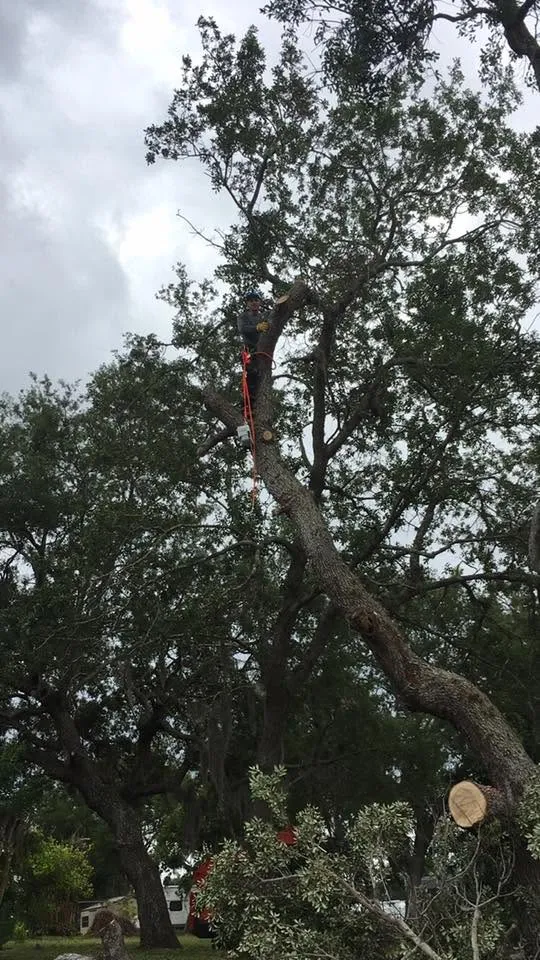
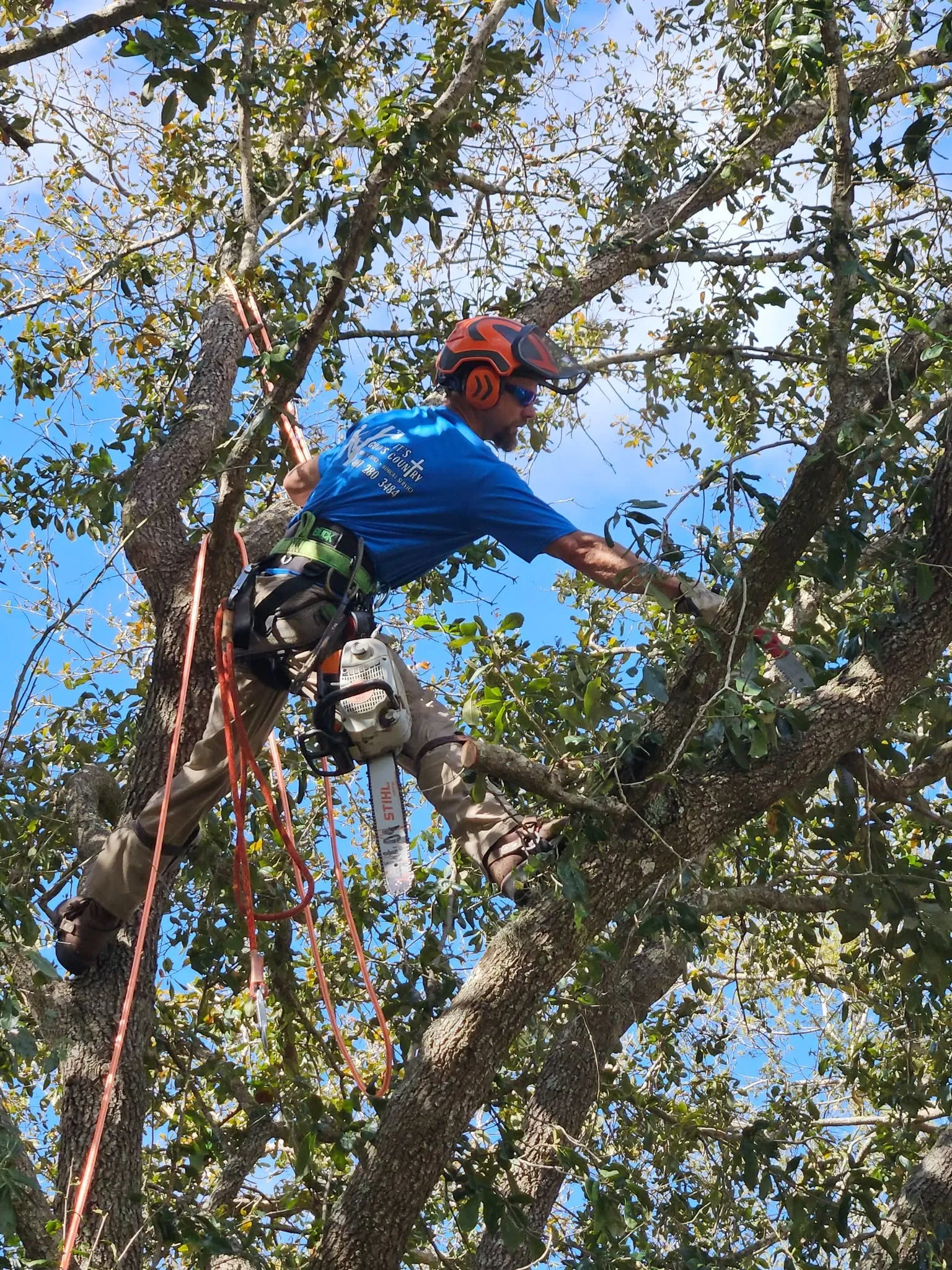
If you're searching for tree pruning near me in DeLand, these photos show what nearby jobs look like: roped climbers working inside live oak canopies, choosing cuts limb by limb. We prune across Volusia County — DeLand, Deltona, Orange City, DeBary, and Lake Helen — with the same crew every time.

Trimming maintains a tree's appearance and clearance on a schedule; pruning is corrective work aimed at structure and health — which limbs stay, which go, and where each cut lands. God's Country does both, and we'll tell you honestly at the estimate which one your tree actually needs.
Prescription pruning in DeLand means the work starts with a written plan for your specific tree — species, defects, targets underneath, and storm exposure — instead of a one-size-fits-all trim. Our certified arborist writes the prescription, the crew makes only those cuts, and you keep the documentation.
Volusia County homeowners usually meet the term two ways: an HOA or insurance carrier asks for tree mitigation on a tree flagged as a risk, or a longtime customer wants one plan that keeps a signature oak healthy for the next decade instead of paying for guesswork every few years. Both start the same way — a DeLand tree pruning expert on your property, on a ladder or with a resistograph if the tree warrants it, writing down exactly what the tree needs and why.
A written prescription. Which limbs come off, which cuts we're making (thinning, reduction, raising, deadwood), the percentage of live canopy affected, and the season the work should happen — documented before a saw starts.
Mitigation pruning that satisfies the paperwork. When an insurer, HOA, or the City of DeLand flags a tree, we prune to the standard the notice actually requires — clearance, weight reduction over the roof, hazard deadwood — and document the finished work so you can close the file.
An honest verdict. Some flagged trees don't need mitigation — and some can't be saved by it. If the right answer is monitoring, or removal, the prescription says so and you decide with real information.
Most mature DeLand oaks do well on a three-to-five-year pruning cycle, young shade trees benefit from structural pruning every two to three years, and any tree holding deadwood over a roof or driveway shouldn't wait for a schedule. We'll recommend an honest cadence at your free estimate.
Structural pruning while limbs are still small means small wounds, fast closure, and a tree that never grows its worst habits in the first place.
Established live oaks and laurel oaks mostly need maintenance: deadwood out, light thinning, clearance held. A steady cycle keeps each visit small.
A spring look at what winter left behind. Deadwood over a roof or driveway doesn't wait for its turn on the calendar — it comes out now.
Usually some version of the same seven questions: whether pruning can save a struggling tree, how much canopy can safely come off, timing around hurricane season, palms, topping, cleanup, and scheduling. Straight answers below — anything else goes in the estimate form and gets answered within 24 hours.
Sometimes. Storm damage, deadwood, and an overloaded canopy often look worse than they are, and targeted pruning or crown reduction can keep a structurally sound tree standing. Decay at the base or a failing root plate is a different story. We assess the tree honestly at the free estimate — if pruning will genuinely fix it, pruning is what we quote.
No — topping is the one cut we won't make. Slicing through the middle of limbs leaves wounds that never close and forces weak, fast regrowth that fails in the next storm. If a tree has outgrown its spot, we quote crown reduction instead: cutting back to healthy lateral limbs so the canopy comes down in size without wrecking the tree.
Most DeLand hardwoods can be pruned year-round, but the sweet spot is the drier months before hurricane season arrives in June — the tree heads into the storms with less sail and no fresh heavy regrowth. Light deadwood removal is fine in any month. We factor species and season into the plan at your estimate.
The working rule for mature trees is no more than about a quarter of the live canopy in one visit — and less for older oaks. Taking more stresses the tree and triggers exactly the weak sprout growth pruning is meant to prevent. When a canopy needs major reshaping, we stage the work across seasons instead of forcing it into one.
Yes. Palms across DeLand collect brown fronds and seed pods that come down in every summer thunderstorm, and over-stripped palms weaken over time. We remove the dead fronds and pods and stop there, leaving the healthy green crown intact so the palm keeps feeding itself.
Everything we cut gets chipped or loaded the same day. Brush goes through the chipper, larger wood rides out on the truck, and we rake the lawn and beds before we leave. If you'd like the chips kept for mulch, say the word and we'll leave the pile wherever you want it.
A regular trim addresses what's visibly overgrown. Prescription pruning starts with a written plan from a certified arborist — the tree's species, defects, what's underneath it, and storm exposure — and the crew makes only the cuts on that plan. DeLand homeowners use it for signature oaks worth protecting and for trees an HOA or insurer has flagged.
Yes. Mitigation notices usually want specific things — weight off the roofline, hazard deadwood out, clearance from the structure. We prune to what the notice requires, photograph the finished work, and give you the documentation to close it out. If the tree genuinely can't be made safe by pruning, we'll tell you that before you spend the money.
Not usually. As long as the crew can reach the trees and gates are open, most DeLand pruning jobs run fine without the homeowner there. We do like to walk the plan with you first — at the estimate or the morning of the job — so you know exactly which limbs are coming off before a saw starts.
Pruning usually rides along with related canopy work: trimming to hold the shape between pruning cycles, a certified arborist assessment when a tree's health is in question, and crown reduction when a canopy has simply outgrown its spot. One God's Country crew handles all of it.
Seasonal and routine trimming for trees of every size.
Expert diagnosis and treatment plans from certified tree professionals.
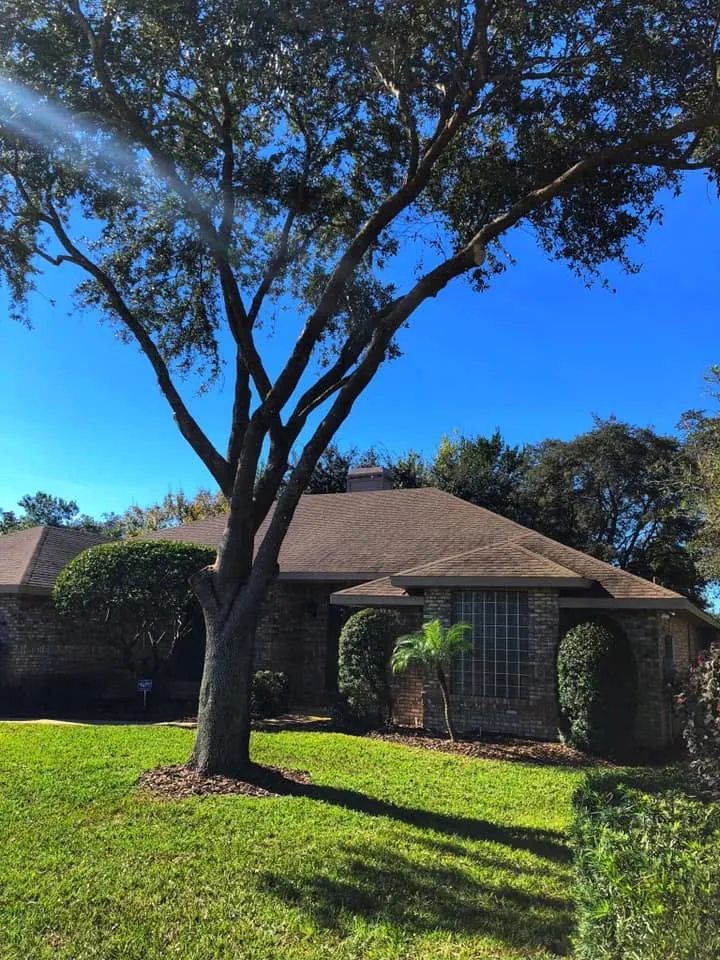
Reduce weight and reshape overgrown or storm-stressed canopies.
Tell us about the oak with two leaders, the limbs creeping over the pool enclosure, or the canopy nobody has touched in a decade. God's Country Tree Service LLC will walk the property, explain every recommended cut, and put an honest price in writing — usually within 24 hours.
Last Updated: September 2026