Certified Arborist Services in DeLand, FL — Expert Diagnosis from a Local Tree Service
God's Country Tree Service LLC is a licensed and insured tree service based in DeLand, Florida, serving Volusia County since 2014, with a certified arborist on staff. We diagnose sick oaks and palms, write real treatment plans, and tell you honestly which trees can be saved and which can’t.
A chainsaw can take down any tree in Volusia County. It takes an arborist to know which trees should still be standing ten hurricane seasons from now. The difference between cutting and tree care
What does a certified arborist in DeLand, FL actually do?
An arborist reads a tree the way an inspector reads a house: root flare, trunk, canopy, and site. In DeLand that means diagnosing declining live oaks, spotting ganoderma conks at a palm’s base, catching nutrient deficiencies in the fronds, and writing a treatment (or removal) plan you can act on.
Most tree problems in DeLand don’t announce themselves until they’re expensive. Sandy Central Florida soil drains fast, hides root damage, and lets decay work quietly for years. Arborist work is catching those stories early. Our guide to what an arborist does on a DeLand property goes deeper.
A thinning oak crown
Live oaks and laurel oaks that leaf out patchy, drop green leaves out of season, or die back from the tips are signaling stress — drought, root damage, or disease. Which one changes everything about the fix.
Conks at the base of a palm
Shelf-like growths near the soil line often mean ganoderma butt rot. Once conks appear the decay inside is already advanced — that palm is a removal call, not a treatment plan.
Yellowing, frizzled fronds
Palms in sandy Central Florida soil run short on potassium, magnesium, and manganese. Discolored or deformed fronds are usually a nutrition problem you can correct — if it's diagnosed before the bud is damaged.
Decline after construction
A new pool, addition, or driveway that cut roots two summers ago can kill an oak today. Root damage in DeLand's sandy soil shows up slowly — an assessment catches it while there's still a tree to save.
When should you call an arborist instead of a general tree service?

Call an arborist instead of a general tree service when the question is what is wrong with the tree, not how fast it can come down. An arborist diagnoses before anyone cuts, so a treatable oak gets a care plan and only a genuine hazard gets the saw. God’s Country does both jobs with one crew.
-
The arborist’s read comes first. Diagnosis, treatment plans, and species-specific care, not a one-size-fits-all “it’s gotta come down.”
-
Licensed and insured, with proof on request. Liability and workers’ compensation coverage you can verify before anyone climbs your oak.
-
One local crew carries out the plan. The same DeLand tree service that diagnoses your tree does the pruning, crown reduction, or removal, and brings the chipper and grapple loader to haul the debris.
What arborist services does God's Country provide?
God’s Country Tree Service provides six arborist services in DeLand, from tree health assessments to save-or-remove verdicts. The others are disease and pest diagnosis, treatment plans, hurricane-season risk checks and planting guidance. One owner-operated crew carries out the plan it writes. Arborist work sits alongside the other tree services we offer across Volusia County.
Tree health assessments
A ground-up read of root flare, trunk, and canopy for any tree you're worried about — with a straight verbal verdict on the spot and a written plan to follow.
Disease & pest diagnosis
Identifying what's actually attacking the tree — fungal decay, borers, root rot, or plain old drought stress — before anyone recommends a cut.
Treatment & care plans
Species-specific plans: corrective pruning, crown reduction, watering and nutrition changes, and a follow-up schedule the same crew can carry out.
Hurricane-season risk checks
Pre-season evaluations of the oaks and pines standing over your roof, pool screen enclosure, or driveway — ranked by what actually needs work first.
Save-or-remove verdicts
The honest call: which trees pruning can fix, and which ones are structural losses. Both answers come in writing, with the reasons behind them.
Species & planting guidance
What to plant where in DeLand — matching species to sandy soil, sun, and distance from structures so today's sapling isn't a removal in twenty years.
How does a tree expert diagnose a sick oak or palm?
A tree expert diagnoses from the ground up: site and soil first, then root flare and trunk, then the canopy’s dieback pattern. For DeLand oaks that means checking for decay, cavities, and construction root damage; for palms, reading the fronds for nutrient deficiencies and the base for ganoderma.

-
Walk the site, not just the tree
Soil, drainage, irrigation, recent construction, and what the neighboring trees are doing all shape a diagnosis. In DeLand's sandy soil, the story is usually underground before it's visible overhead.
-
Read the root flare and trunk
We check for buried root flares, girdling roots, cavities, cracks, and fungal conks — the structural evidence. A mushroom at the base of an oak means something very different than one in the mulch.
-
Read the canopy
Dieback pattern, leaf color and size, deadwood distribution, and how the tree responded to past pruning. Where a canopy is failing tells us why it's failing.
-
Give the verdict in plain English
Save, treat, monitor, or remove — and why. If it's treatable you get a plan with real steps. If it isn't, we say so instead of selling you fertilizer for a dead tree.
-
Put it in writing within 24 hours
The written estimate covers whatever the verdict calls for (pruning, crown reduction, or removal), priced by the same owner-operated crew that will do the work.
Who is a certified arborist near me in DeLand, FL?
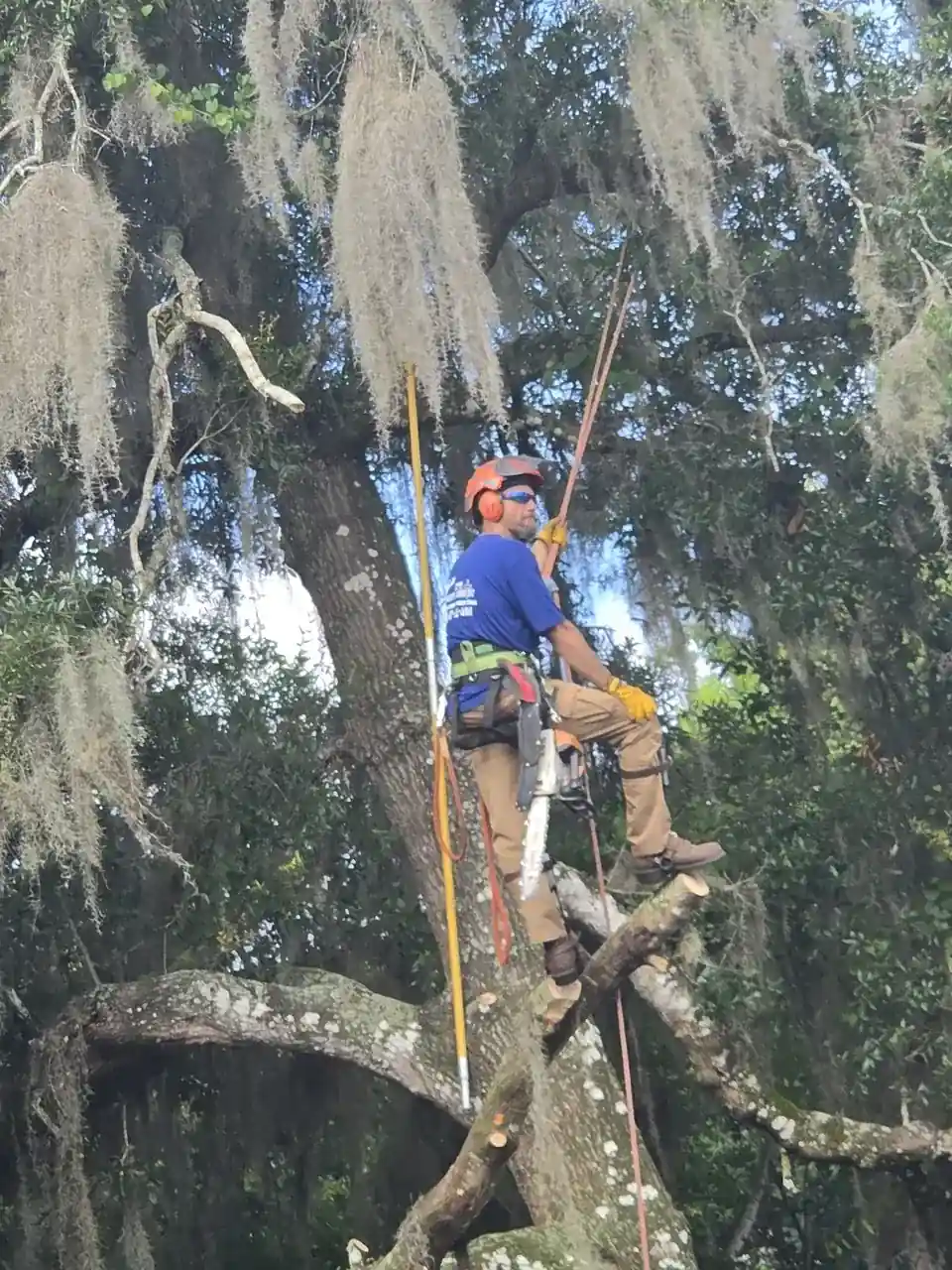
God’s Country Tree Service has an arborist on staff near you in DeLand, FL, and works within about 50 miles of it. That covers DeLeon Springs, Lake Helen, Orange City, Deltona and DeBary. When a diagnosis cannot be made from the lawn, a roped climber goes into the canopy to read the limbs up close.

Which trees can be saved — and which ones can’t?
More DeLand trees can be saved than most homeowners expect — and fewer than a storm-chaser’s quote implies. Stress, nutrition, and minor storm damage are usually treatable; advanced decay, ganoderma, and failing roots are not. The patterns below are how we call it, in writing, either way.
Usually worth saving
- Thinning canopy with a healthy trunk and root flare
- Palm nutrient deficiencies caught before bud damage
- Storm-torn limbs on an otherwise sound oak
- Overextended limbs that crown reduction can rebalance
- Early root-zone stress after nearby construction
Time to plan a removal
- Ganoderma conks at the base of a palm or oak
- Major trunk decay, cavities, or a split leader
- A worsening lean with lifting soil at the roots
- Dead or dying crown over a house or pool enclosure
- Severed structural roots that can't regrow anchorage
Either verdict comes in writing: a care plan if the tree is treatable, a quote for a roped, controlled removal if it isn’t. Our post on the signs a DeLand tree has become dangerous lists what to look for before you call.
What do DeLand property owners ask an arborist?
DeLand property owners ask an arborist mostly about credentials and insurance, whether a thinning oak has to come down, and what an assessment costs. They also ask whether we treat trees or only remove them, and how to check roots after a pool or addition is built. The five answers follow.
What certifications and insurance does God's Country carry?
The arborist on our staff holds an arborist certification, and the company carries liability and workers' compensation insurance. We show proof of coverage before any work starts. That matters in DeLand, where storm season brings out plenty of crews whose paperwork doesn't survive a second look. Ask for documentation at the estimate; we expect you to.
My oak is thinning — does it have to come down?
A thinning oak does not have to come down by default. A thinning crown is a symptom, not a verdict. Drought stress, root damage from construction, soil compaction, and disease all produce similar-looking canopies but call for completely different responses. We assess the root flare, trunk, and dieback pattern first. Many DeLand oaks recover with corrective pruning and root-zone care instead of removal.
How much does an arborist assessment cost in DeLand?
The estimate itself is free: we walk the property, give you a verbal read on the spot, and follow with a written quote for whatever the tree actually needs. There's no fee just to find out whether that oak over your roof is a hazard or merely ugly this season.
Do you treat trees, or just recommend removals?
We do the work, not just the diagnosis. Corrective pruning, crown reduction, deadwood removal, and ongoing maintenance plans all come from the same crew that assessed the tree, and when removal is the honest answer, we handle that too. One local company, one written quote.
Can you check my trees after a pool or addition was built?
Yes, we check trees after construction, and it is worth asking. Construction that trenches through a root zone can take one to three years to show up as canopy dieback, especially in sandy soil that drains fast. An assessment after the build, and again a year later, catches root damage while corrective care can still make a difference.
What other tree services do DeLand property owners pair with arborist services?
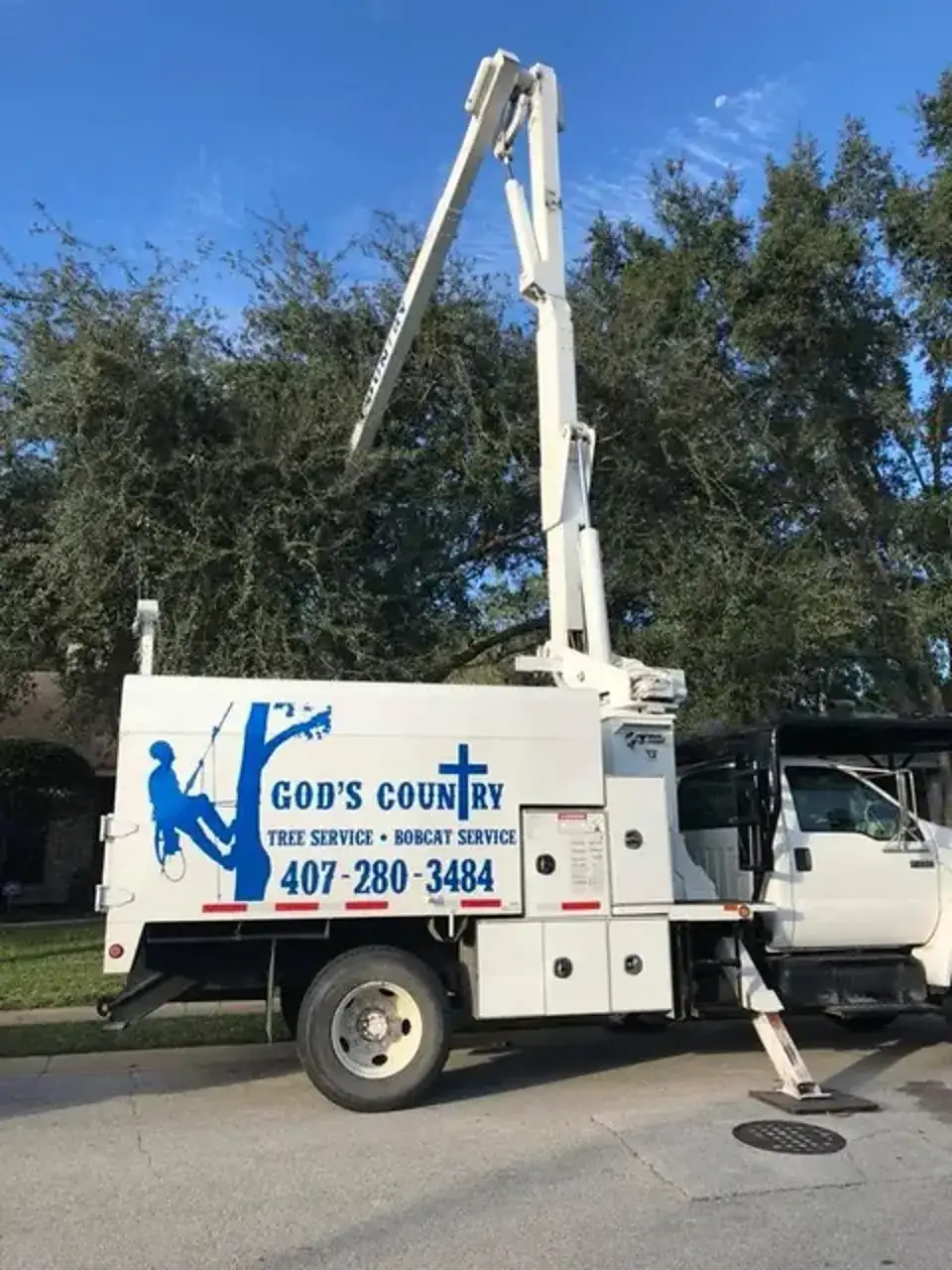
DeLand property owners most often follow an arborist assessment with pruning, hazard removal or stump work. Corrective tree pruning and crown reduction handle the trees worth saving, dead and hazardous tree removal covers the hazard that cannot be treated, and stump grinding finishes the spot where a tree came out. The crew that diagnosed the tree quotes all three.
Tree Trimming & Pruning
Clearance trimming, structural pruning, crown reduction and maintenance plans.
- Roof & pool-screen clearance
- Crown reduction, never topping
- Recurring plans for homes & HOAs

Dead & Hazardous Tree Removal
Specialized removal of dead and diseased trees threatening your property.
- Dead & diseased specialists
- Safe extraction & disposal
- Protects roofs & fences

Stump Grinding
Stumps ground below grade after a removal or from a tree cut years ago.
- Ground below grade
- Chips raked or hauled
- Spot ready for sod or planting
Worried About an Oak or Palm That Doesn’t Look Right?
Describe the tree (the thinning crown, the yellowing fronds, the mushrooms at the base) and God's Country Tree Service LLC will walk the property, diagnose what’s actually happening, and put the verdict in writing. The visit and the written quote are free.
Last Updated: October 2026